
Why wearableAI is the missing primitive for the post-screen era
Published
Feb 3, 2026
“Computers used to live on desks. Then they fit in our pockets. Now they’re on our faces, in our cars, and around us. But AI still behaves like it’s stuck behind a keyboard.”
A NOTE FROM SEEIT RESEARCH TEAM:
This project started with a simple frustration. We'd been watching AI get smarter with faster models, better reasoning, more capabilities…but the interface hadn't evolved. You still had to stop what you were doing, pull out your phone, open an app, type something, wait, read a response.
IT FELT WRONG.
We started experimenting with Meta Ray-Ban smart glasses. Not because we thought glasses were the future (though they might be), but because they forced us to answer a harder question: what does AI look like when there's no screen to hide behind?
What emerged wasn't just an app. It became a testbed for something larger…an ambient intelligence layer that could live across wearables, XR devices, and mobility platforms. A system that respects the devices you already use, disappears when you don't need it, and reappears exactly when you do.
WearableAI is in active development. It's experimental, but production-grade. It's opinionated, but model-agnostic. It's privacy-forward by design, not as an afterthought.
This is what we've learned so far.
WHY WEARABLEAI MATTERS
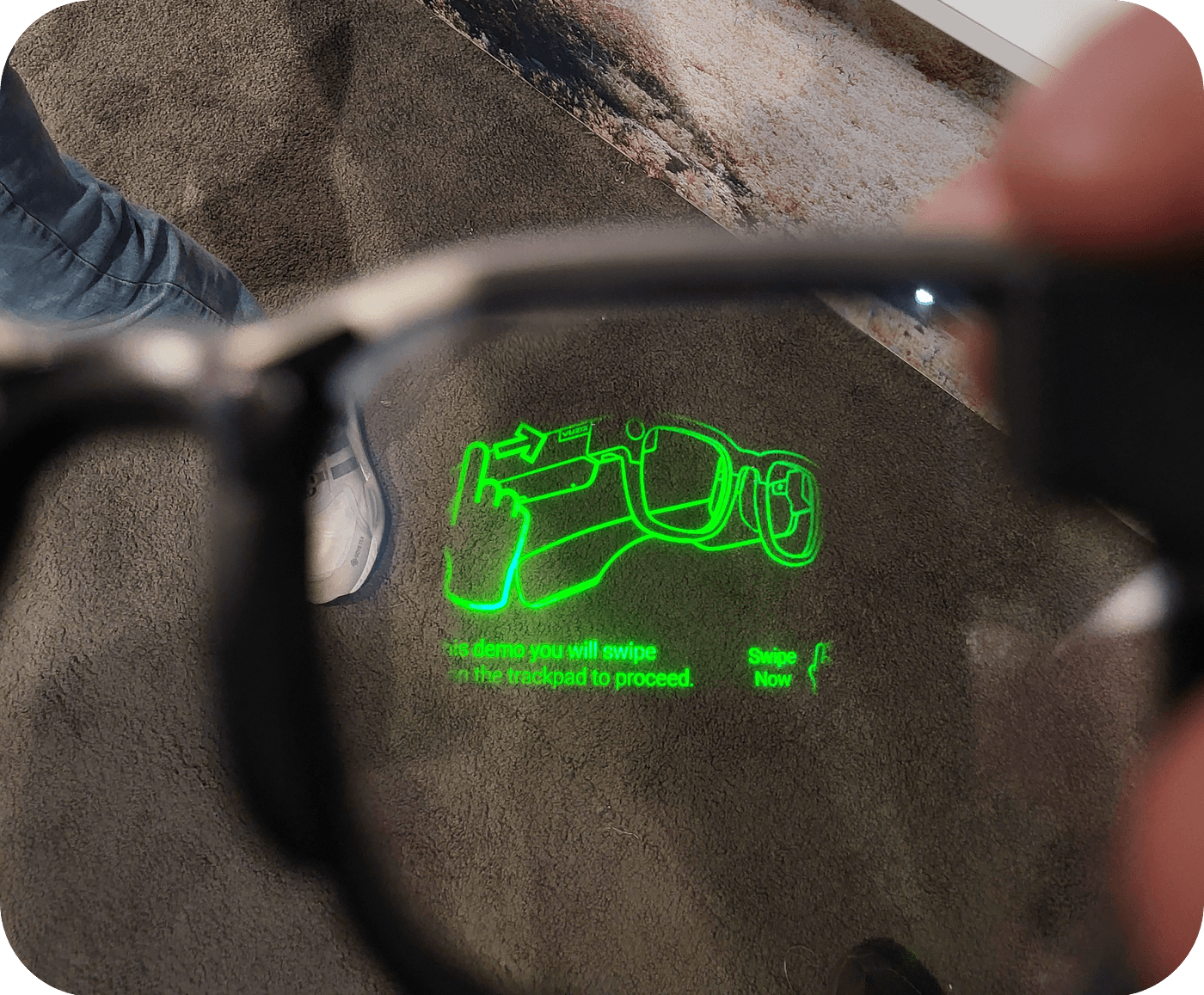
Most AI products today are built on assumptions that break the moment you step away from your desk:
They assume a screen
They assume a keyboard
They assume focused attention
They assume you're sitting still
Wearables, XR headsets, and in-car systems shatter every single one of those assumptions.
Smart glasses require eyes-up interaction.
XR environments demand spatial awareness.
Driving contexts prohibit visual distraction.
These aren't edge cases but the next computing paradigm, and AI hasn't caught up yet.
WEARABLEAI EXISTS TO SOLVE THIS GAP.
Let's walk through what we built, why we built it this way, and what it taught us about the future of human-AI interaction.
THE CORE ARCHITECTURE
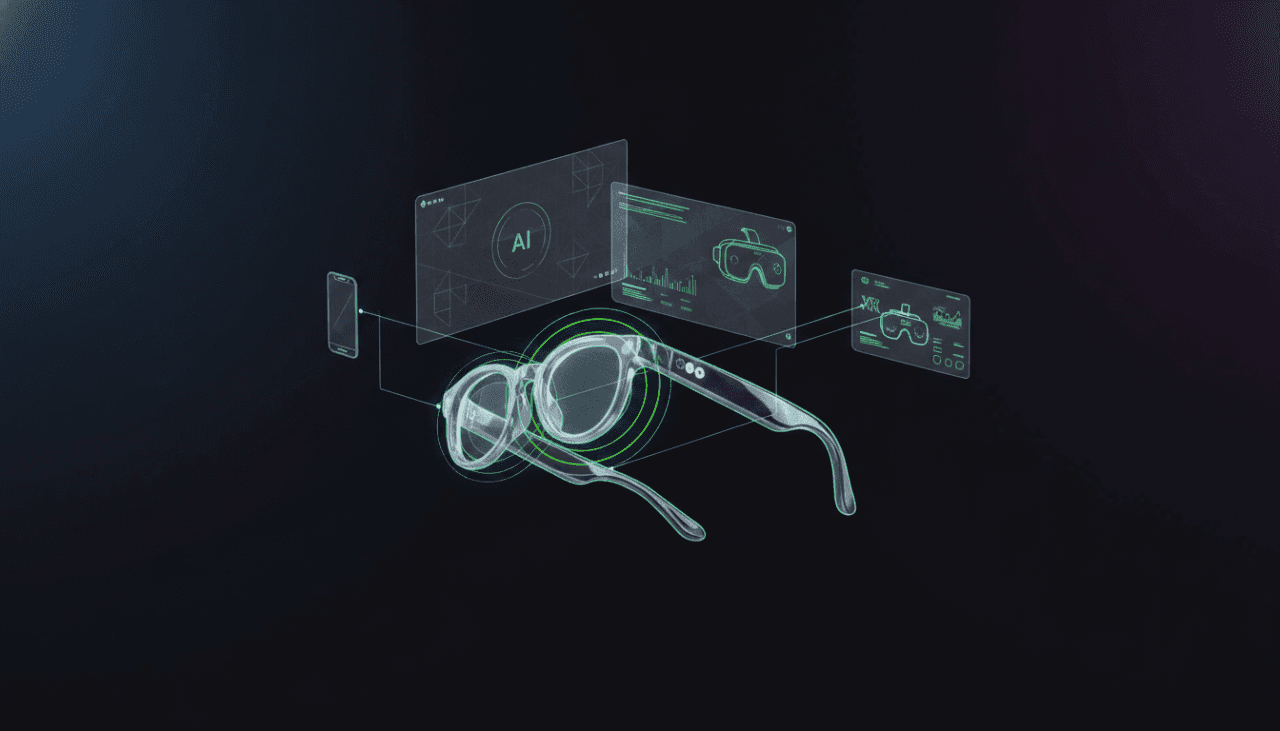
Building an ambient intelligence layer.
WearableAI isn't trying to be Siri or Alexa or ChatGPT. It's infrastructure. Think of it as a middleware layer that sits between your devices and AI models, orchestrating intelligence without demanding attention.
At its foundation, WearableAI unifies four critical components:
→ Physical Devices: Phones, smart glasses, XR headsets, etc,. We don't care what surface the AI runs on. The same interaction model scales from Meta Ray-Bans to Apple Vision Pro to CarPlay dashboards.
→ Model Providers: We're model-agnostic by design. Whether you need the reasoning of OpenAI, the real-time social context of Grok, or the versatility of Gemini, the interface remains constant while the "brain" adapts to your latency and task requirements.
→ Native OS Capabilities: Instead of rebuilding reminders, we use iOS Reminders. Instead of custom widgets, we leverage native widget systems. We treat the underlying OS as a rich foundation of primitives, adding the intelligence layer necessary to orchestrate them into a unified, voice-first experience.
→ Real-Time & Asynchronous Interactions: Some queries need instant responses. Others can wait. The architecture handles both intelligently, because real-world usage is messy and context-dependent.
The result is a non-persistent intelligence layer: a presence that maintains high contextual awareness while maintaining a zero-pixel footprint. It is available on-demand, yet architecturally invisible when idle.
VOICE-FIRST DESIGN
Rethinking the interface - Why typing is the wrong primitive for ambient computing.
Here’s our primary learnings from building for smart glasses: The QWERTY interface is a legacy bottleneck. For spatial and wearable computing, the keyboard is a high-friction artifact of a stationary era that we must intentionally design away from.
When you’re walking, driving or wearing a headset, using keyboard is rather impossible than just inconvenient, thus voice commands become the only viable interface.
Integrating voice is often mistaken for a feature addition; in reality, it is a complete shift in the input-output architecture. We aren't just transcribing phonemes but rather building a system that understands prosody, environmental context, and the nuance of natural dialogue.
We are optimizing the WearableAI stack for Intent Velocity: the minimization of the temporal gap between a user’s cognitive intent and the system's execution:
Zero-Friction Invocation
We’re moving beyond the performative "wake word" era and focusing on natural conversational entry. By leveraging the host device’s always-on capabilities, the transition from silence to assistance is designed to be architecturally seamless.
Persistent Conversational State
WearableAI’s engine prioritizes “conversational continuity”, maintaining a persistent state across turns. This allows for high-context follow-ups where the AI maintains the semantic thread without requiring the user to re-establish the mental model of the task.
Acoustic Signal Conditioning
XR headsets and Smart Glasses present a unique hardware challenge: they possess significantly lower signal-to-noise ratios than dedicated smartphones. To solve for this, we’ve implemented a “wearable-optimized audio pipeline.” This involves aggressive noise-reduction filters and far-field capture optimizations, ensuring high-fidelity intent resolution even in high-ambient-noise environments.
Dynamic Response Profiles
We offer multiple voice personas as a functional choice for the user. Different persona models prioritize different ends of the spectrum: some are optimized for minimal-latency responses, while others prioritize emotional resonance.
MODEL AGNOSTICISM
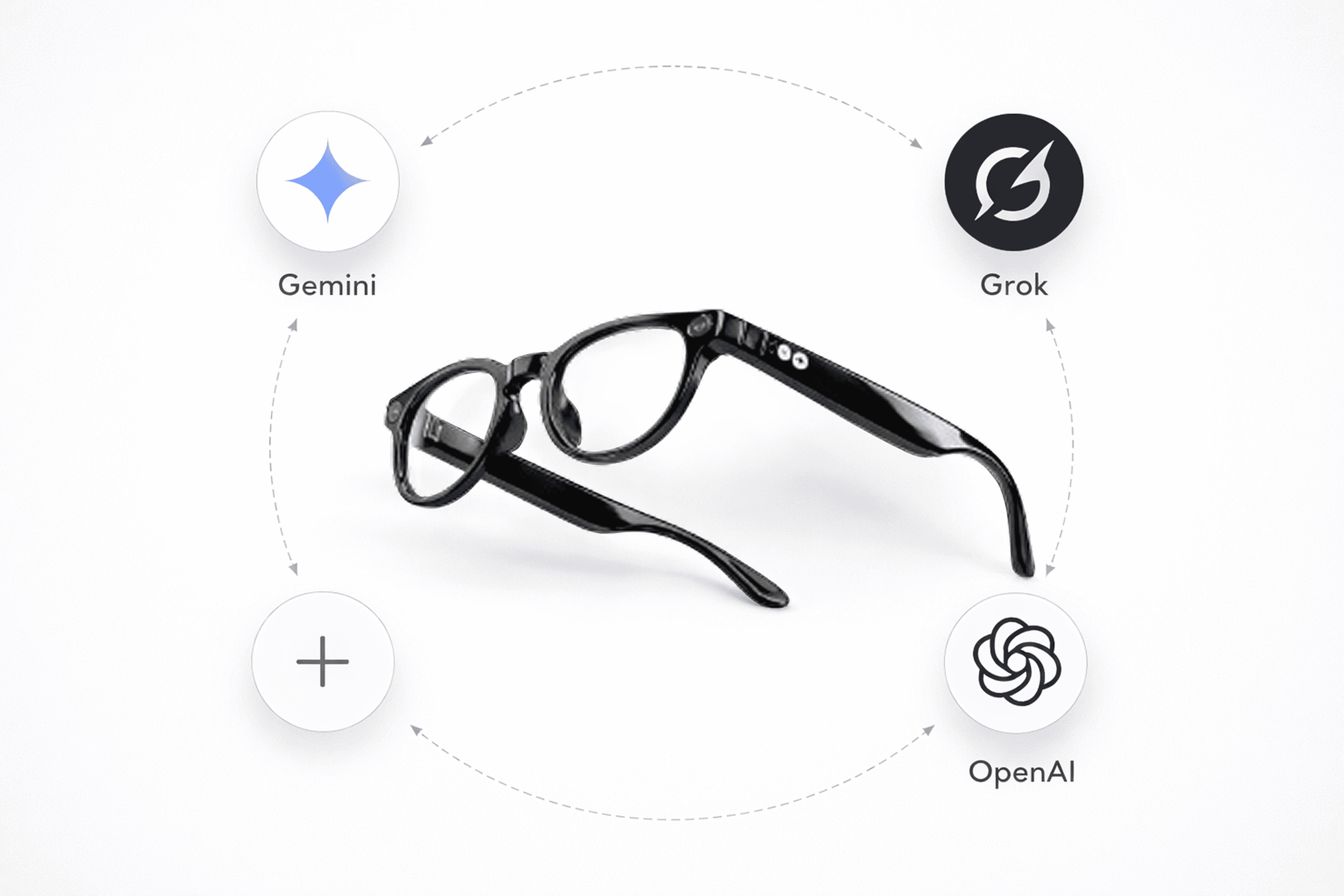
Why We Don't Lock You In - Experimentation over ecosystem capture.
One of the most consequential architectural decisions we made with WearableAI was the refusal to tie the user experience to a single LLM provider. In the current landscape, hardware is often a Trojan horse for ecosystem lock-in. We’ve taken the opposite path, treating AI models as pluggable reasoning modules rather than static features.
WearableAI currently supports a diverse fleet of LLMs:
Gemini as our primary engine for robust reasoning and multimodal tasks.
Grok integrated for real-time situational awareness with X search integration.
OpenAI Realtime specifically for ultra-low-latency voice interactions.
By allowing users to bring their own API keys and switch models mid-flow, we’ve moved from a "closed garden" to an “open evaluation environment”.
The strategic benefits of model agnosticism: → Future proofing: Our architecture is designed to be provider-indifferent, ensuring that if a better model launches next quarter, it can be integrated into the WearableAI substrate within hours. Users are not trapped in any single ecosystem.
→ Real benchmarking: We’ve found that synthetic benchmarks rarely translate to the "face-top" environment. Through lived-experiences, our users discover which models excel in specific contexts. Gemini might be better for planning. Grok might be faster for current events. The system adapts to usage patterns.
We are witnessing the decoupling of the Interface from the Inference. The "Walled Garden" model is a legacy strategy that fails in high-stakes, real-world contexts. By building an open orchestration layer, we’ve shifted the value proposition from "Which model do you use?" to "How effectively does the system resolve your intent?”
PRIVACY BY ARCHITECTURE
Engineering the “zero-server” constraint, away from the notion of privacy as a feature toggle.
In the wearable era, trust shouldn’t be a feature toggle but a foundational design constraint. A device positioned on the face, equipped with an ambient microphone, demands a higher level of architectural integrity than a smartphone that spends the majority of its lifecycle in a pocket.
We took privacy seriously from day one:
We have eliminated the "cloud tax". Everything from conversational history and preference nodes to model configurations and application states resides exclusively on the user’s device. By design, there is no automatic cloud persistence and no central server collecting telemetry.
At present, there is no server at all.
When wearableAI integrates with iOS shortcuts and automations, we utilize a local LLM to interpret intent and map descriptions to tool-calling capabilities. Your automation workflows never leave your device. Some models have internet search enabled. This is clearly labeled per model. You know when AI is reaching out, and you control which models can.
Rather than injecting data into existing user databases, WearableAI operates within a dedicated, sandboxed list, which makes it non-invasive, and it respects your existing organizational system.
We are moving toward a Privacy-by-Architecture model where the business DOESN’T depend on "free product, user is the commodity" model. By building infrastructure you own rather than a service you rent, we allow the AI to be intimate without being invasive.
SMART GLASSES INTEGRATION
Beyond Peripherals: Engineering for a Wearable-Native Reality.
The current industry standard for "Wearable AI" is essentially a mobile app that treats smart glasses as a basic Bluetooth peripheral. In this model, the glasses are an afterthought, a remote microphone for a phone-centric experience.
At SeeIt, we rejected this conventional approach in favor of a Wearable-Native Architecture. We treat the glasses as the primary interface node.
Interface primacy and seamless handover
In our stack, the smartphone recedes into the background to function as a compute engine, while the glasses become the dominant UI. This requires high-precision “Audio I/O Routing” and a seamless state-handover mechanism that ensures the AI follows the user's focus, moving between phone and wearable without a break in conversational continuity.
Solving for real-world turbulence
Building for the face forced us to solve for environmental variables that desk-bound AI never encounters. We’ve implemented a UX philosophy built on “High-resolution contextual awareness”:
Asynchronous Interruption Handling: Real-world interactions are fragmented. Our model is engineered to pause, buffer, and resume based on environmental cues, whether it's a passing car or a face-to-face greeting, ensuring the AI respects social and physical boundaries.
Synthesized Conciseness: Long-form monologues are a failure in a mobility context; so we have tuned our response patterns for Glanceable Intelligence, delivering high-value information in short, context-aware bursts.
Cross-Modal Feedback Loops: We utilize haptic and visual cues on the phone paired with spatial audio cues in the glasses to create a multi-sensory feedback loop that provides confirmation without demanding that the user break stride or look down.
The transition from "Peripheral AI" to "Wearable-native AI" represents a shift from command-line logic to situational flow. We are no longer asking the user to pivot their attention toward a digital silo; we are architecting an intelligence layer that maps directly onto the user’s physical trajectory and situational flow.
APP INTENTS, SHORTCUTS AND WIDGETS
Harnessing system primitives: The OS as the orchestration interface
A core tenet of our engineering philosophy at SeeIt is “don’t rebuild what already works”. We DON’T seek to rebuild established platform behaviors, instead, we treat the host OS as a rich library of “functional primitives”.
iOS has a powerful Shortcuts system. XR platforms have spatial widgets. CarPlay has voice intents. Instead of creating parallel systems, we integrate deeply with what's already there.
App Intents
In a wearable context, "navigation" is a design failure. We utilize App Intents to launch WearableAI with predefined defaults such as specific models, specific contexts, specific tasks.
Widgets
In the real world context, user engagement is inversely proportional to the number of steps required for activation. By using widgets, we minimize the "activation energy" required for an interaction.
Shortcuts and Automations
Users connect their existing workflows to WearableAI. A local LLM generates natural language descriptions of what each shortcut does. These descriptions map to AI tool-calling capabilities.
We are not engaged in a hostile takeover of the OS; we are performing an architectural upgrade. By making native features conversational, we evolve the OS from a passive container of apps into an Active Intelligence Substrate.
THE BIGGER VISION
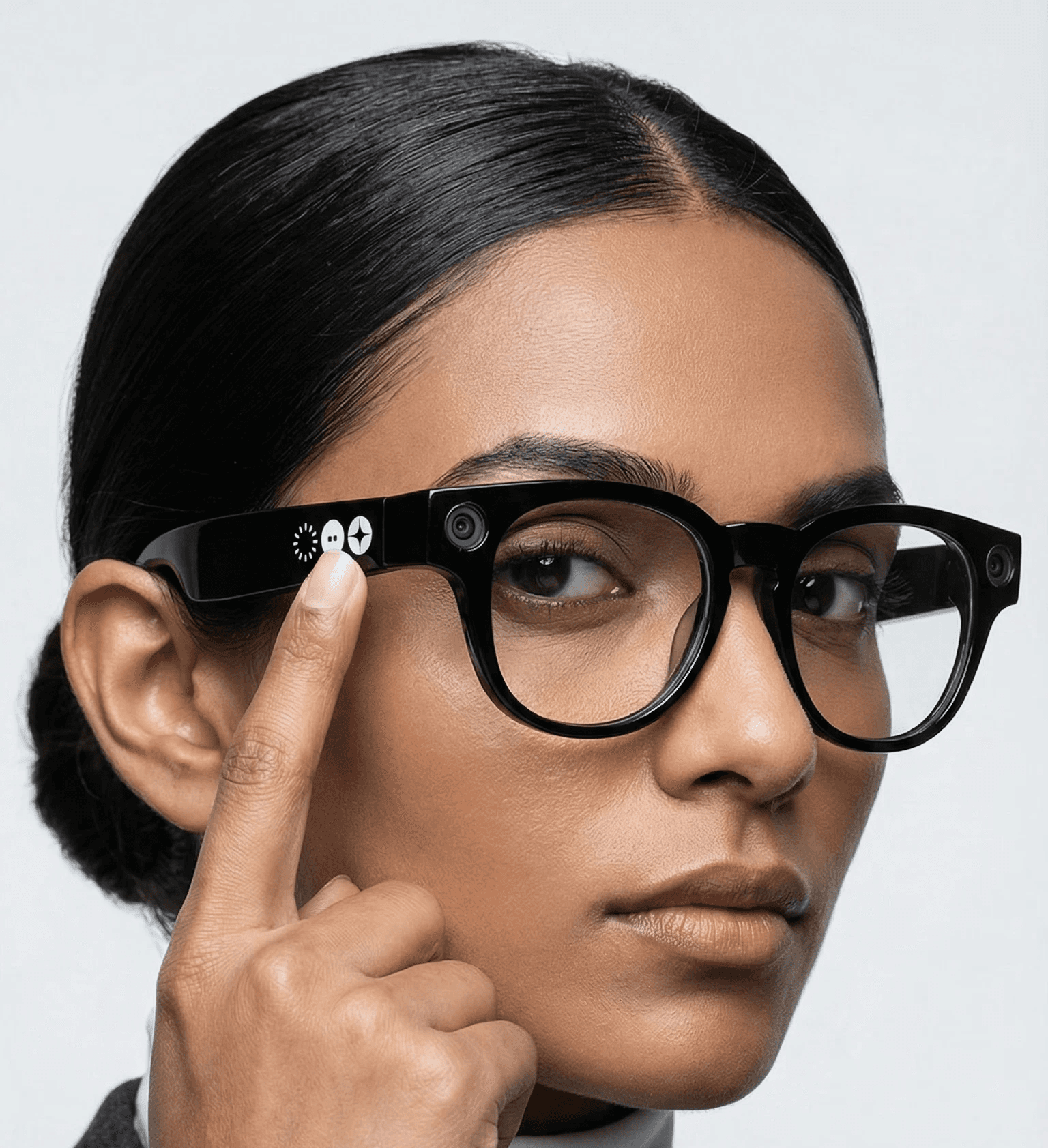
The Universal Substrate: Beyond the Glass Interface.
While WearableAI found its first production environment in smart glasses, our architecture was never intended to be device-specific. We are building for a reality where intelligence is ambient and omni-present, rather than localized in a single piece of glass or plastic.
The same principles of low-latency automation and privacy-first approach are currently being scaled across the broader mobility and spatial computing landscape:
Spatial Computing (XR): High-fidelity headsets like the Apple Vision Pro and Meta Quest share a critical constraint: they are “eyes-up” environments where a traditional UI is a tax on the user’s immersion. WearableAI functions as the cognitive glue for these spatial ecosystems, providing a voice-first bridge to complex workflows.
The Mobility Ecosystem:
The modern vehicle via CarPlay and Android Auto is rapidly evolving into a software-defined environment. An ambient intelligence layer that respects platform boundaries and adds hands-free capabilities is a natural fit.
Future Wearable Devices:
From smartwatches to future AR-contact lenses and ambient ear-worn devices, the same design principles hold: Respect the platform. Stay local. Disappear when not needed.
We are not building another destination app for users to visit. We are engineering a Universal Intelligence Substrate that adapts to the physics and constraints of whatever surface it inhabits.
As the industry pivots away from pixel-dense screens toward ambient, voice-first interactions, the legacy "App Model" breaks. WearableAI is being engineered to be THE Operating Model for the next era of human-computer interaction.
WHO WEARABLE AI IS FOR
The post-screen era cohort.
WearableAI is built for:
Power users exploring the edge of wearable and XR computing.
Builders experimenting with ambient AI interfaces and interaction patterns.
Early adopters of smart glasses, spatial devices, and voice-first AI systems.
Developers who want to compare model behavior in real-world contexts, not benchmarks.
Privacy-conscious users who want AI without surrendering control or data.
If you've ever felt frustrated that AI still behaves like it's stuck behind a keyboard, this is for you.
TECHNICAL THEMES
Design principles that shaped the system.
Our development of the WearableAI stack was guided by five non-negotiable architectural patterns:
Voice as the primary primitive: We treat voice as the foundational interface. In a mobility-first context, all other UI is secondary.
System Symbiosis: We reject redundant architecture. We don't rebuild reminders or shortcuts; we deeply integrate with existing OS primitives to make them conversational.
Local-first sovereignty: Privacy is treated as an immutable design constraint. Our zero-server architecture ensures that data remains local by default, not by choice.
Provider agnosticism: Intelligence is a liquid utility. We’ve built the infrastructure to outlast individual model providers, ensuring the system remains state-of-the-art regardless of which LLM leads the market.
Attentional respect: AI should be an ambient presence, not a demanding distraction. We design for the "disappearing interface," where utility is high but the cognitive tax is near zero.
TRY IT YOURSELF
WearableAI is live and evolving. It's experimental, but it works.
If you have Meta Ray-Ban smart glasses, an XR headset, or just want to see what hands-free AI feels like, you can try it here:
https://testflight.apple.com/join/545j9fze
We're building this in public. Feedback shapes the roadmap. Experimentation drives iteration.
When technology gets quiet, that's when it finally starts to feel human.